

How to Write a No-Show & Late Cancellation Policy for Your Therapy Practice
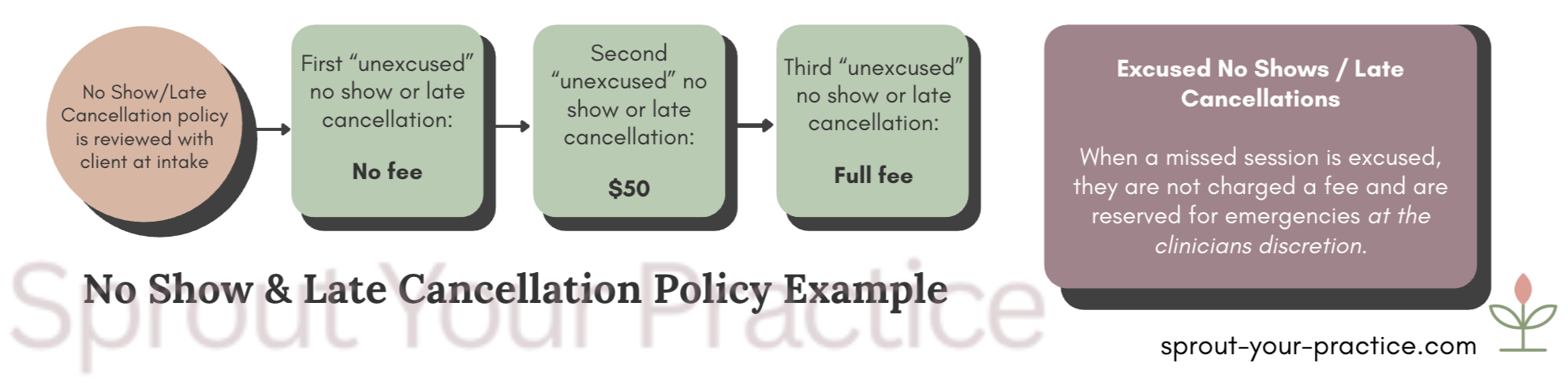
A good no-show policy protects your clinicians' time without punishing clients for being human. The essentials: a clear cancellation window (24 hours is standard), a defined fee, a short list of understandable exceptions, and a consistent way your team applies it. Below is an example you can adapt — plus how I think about keeping it fair.
Why you need a written policy
Empty slots are one of the quietest drains on a practice. An unfilled session isn't just lost income — it's a slot a waitlisted client could have used. A written, consistently applied policy sets expectations up front, reduces awkward one-off decisions, and protects your clinicians from feeling like the bad guy.
What to include in your policy
1. Cancellation window. How much notice you need — 24 hours is common, 48 for some specialties.
2. The fee. A flat amount or the session rate. Note that most insurers do not reimburse no-show fees, so the client is responsible.
3. What counts as a no-show. E.g., missing a session or arriving so late it can't be held.
4. Exceptions. Genuine emergencies, illness, and other reasonable circumstances, applied with clinical judgment.
5. How it's communicated. Signed at intake, referenced in reminders, explained warmly.
Example policy you can adapt
“We ask for at least 24 hours' notice to cancel or reschedule. Appointments cancelled with less notice, or missed without notice, may be charged a [$ amount / full session fee]. Because insurance does not cover missed sessions, this fee is not billable to insurance and is the client's responsibility. We understand emergencies happen — if something comes up, please reach out, and we'll work with you.”
Keeping it fair and accessible
This is where values show up. I'm not a fan of punishment-based policies. Consider waiving the first occurrence, offering flexibility for clients on sliding scale or facing hardship, and training your team to lead with curiosity (“Is everything okay?”) before enforcing a fee. A policy can hold a firm boundary and still be compassionate — those aren't in conflict.
Frequently asked questions
Can I charge a no-show fee to insurance?
Generally no. Most payers don't reimburse missed sessions, so the fee is billed directly to the client. Confirm the rules in your payer contracts.
Should the fee be the full session rate?
It's your call. Some practices charge the full rate, others a reduced flat fee. Whatever you choose, apply it consistently and state it clearly at intake.
Want a full set of policies and templates built for group practices? Explore the Practice Builder toolkits.
Start Your Practice with Clarity
Sign up below to get my free Practice Vision & Values Worksheet — the first step to building a sustainable, ethical practice.
You’ll also get occasional practice-building tips and tools! No spam, just resources I wish I had starting out.